
Calhoun County Arrest Warrants Explained
An arrest warrant is a court's command that someone be taken into custody, not paperwork a police officer writes up alone. The Arkansas District Court Benchbook walks through Rule of Criminal Procedure 7.1, which lets a judicial officer issue an arrest warrant on reasonable cause backed by an affidavit, recorded testimony, or other documented information. The same rule covers what happens after a person ignores a summons or citation, and it lets a clerk issue process when the court authorizes it. None of that adds up to a public list of every Calhoun County arrest warrant, though. A docket entry may hint at one, yet the judge's order and the court record control. A charge is only an allegation. A warrant orders an arrest. A booking shows custody happened. Those events connect, but each one means something different, so current status has to come from the issuing court, the Calhoun County Sheriff's Office, or the federal agency holding the file.
Rule 7.1 in Calhoun County
The rule focuses on a judicial finding and documented grounds. It does not mean every complaint yields an arrest warrant. A court may instead use a summons or citation when the law and facts allow. If a person fails to obey that process, a later warrant may follow. The separate failure-to-appear offense in A.C.A. §5-54-120 is not the same as the court's power to issue process. A docket can reflect one, both, or neither.
The Arkansas Judiciary court forms page lists an order for issuance of an arrest warrant and summons, along with a surety form. It is a court form, not a public self-clearance application. The official form listing illustrates why the clerk, judge, and sheriff have distinct jobs.
The official source provides a blank view of that court process:
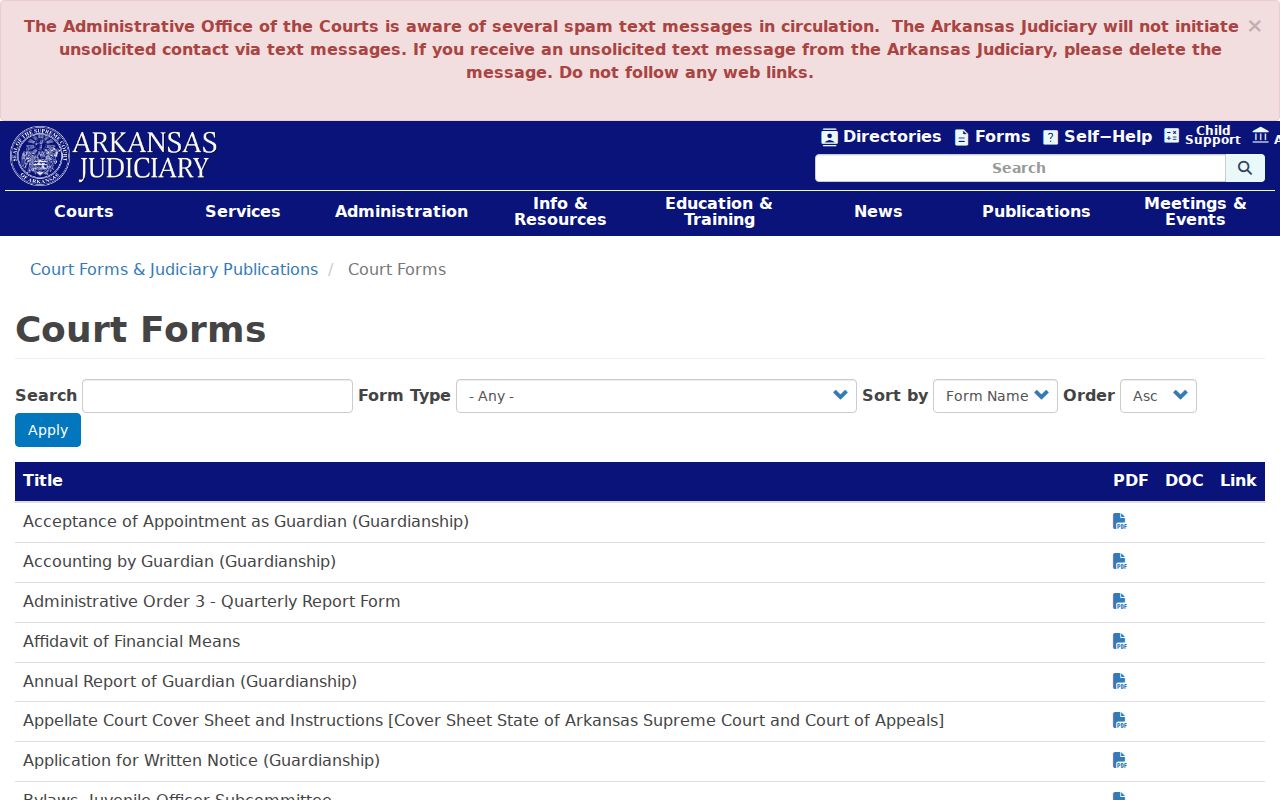
The state form page shows blank court process only, with no defendant names and no live Calhoun County arrest warrant data.
Inside a Calhoun County Arrest Warrant
A public docket often carries more context than a custody roster, though fields vary by case and access limits. Read the dates before concluding anything. A line showing issuance may be followed by service, recall, or a quash. A missing later entry does not prove the Calhoun County arrest warrant is still active.
| Case number | Identifies the court file; 60CR-26-00001 is only a sample. |
|---|---|
| Court and case type | Routes the question to district, circuit, or federal court. |
| Charge and statute | States the alleged offense and level when public. |
| Docket event | May state issued, served, recalled, quashed, or closed. |
| Bond or release event | Shows an entered event, not a promise of current terms. |
| Hearing information | Shows a scheduled event when public. |
Sealed matters, juvenile cases, and investigative files may never appear. Only the issuing authority can say whether Calhoun County process is enforceable right now.
Calhoun Felony Warrant Route
A felony question may start in district court at a preliminary stage and then move to Calhoun County Circuit Court, part of the Thirteenth Judicial Circuit. Circuit Clerk Jeanie Smith's directory lists P.O. Box 1175, Hampton, AR 71744 and 870-798-2517, and her office is the public starting point for circuit filings and docket questions, though it cannot give legal advice or promise surrender terms. County district matters route through Scilar Ray. Hampton city matters route through Laura Evans. The split matters, because the wrong clerk may not control the file. Begin with the notice, the citation, or a Search ARCourts result, and ask for the court name, the case type, and the latest warrant event. Then ask what the judge requires next: an appearance, a motion, bond, or another step in Calhoun County court.
Circuit court records
Jeanie Smith, P.O. Box 1175, Hampton, AR 71744
870-798-2517
Sheriff and detention
449 9th Street, Hampton, AR 71744; P.O. Box 1174
870-798-2323
Serving Arrest Warrants in Calhoun County
The court issues the process. Deputies serve it and handle custody. The published channel for the Calhoun County Sheriff's Office is the main office and detention center at 449 9th Street in Hampton, reachable at 870-798-2323. The official sheriff app listing says dispatch answers calls for service around the clock, while administrative staff work Monday through Friday from 8 a.m. to 4 p.m. Calhoun County posts no separate warrant-unit line, no online surrender appointment, and no walk-in warrant desk. So call first. Ask whether the court must enter an instruction before a trip to jail, what identification to bring, where to report, and whether counsel may arrange a hearing. Dispatch being awake does not mean warrant-status staff are. A deputy's service only answers whether the arrest command was carried out. Later court events stand on their own.
Docket, Roster, and Live Status
Search ARCourts finds public case information by participant name or case description. A result may show case number, court, filing date, charge, docket events, hearings, and disposition. It is the strongest online lead for a Calhoun County warrant check, yet not a complete statewide active-warrant index. A new order may lag, and restricted records stay hidden.
| Source | What it can show | What it cannot certify |
|---|---|---|
| Search ARCourts | Public cases and docket events | Live status of every warrant |
| Calhoun roster | Current, new, or recent custody | All unserved warrants |
| Issuing clerk | Court file and required route | Legal advice or outcome |
| Sheriff | Custody and service instructions | A judge's recall decision |
The Calhoun jail roster helps only with custody orientation. A roster charge may mention warrant words, but it does not show every issuing court, warrant number, bond term, status, or recall date, and a past booking does not prove a live warrant. Note: A historical warrant entry is a lead; current status requires the issuing court or serving agency.
Comparing Arrest, Summons, and Bench Warrants
Calhoun County criminal cases can carry one of three labels, and the wording matters. A summons just tells you to show up. A bench warrant or capias is what a court uses after someone misses a required step, and an arrest warrant actually authorizes police to take a person into custody. Read the label on the paper before you act.
| Feature | Arrest warrant | Summons | Bench warrant or capias |
|---|---|---|---|
| Core command | Authorizes arrest | Orders appearance | Brings a person before court |
| Typical setting | Grounds under Rule 7.1 | Initial notice | Missed duty |
| Status source | Court and sheriff | Court | Court |
| Response | Confirm and seek counsel | Follow stated date | Ask about recall or reset |
A capias is one more tool the court has. It commands an arrest to bring a person before a judge, though it settles nothing on its own. Missed court dates get their own treatment on the Calhoun County bench warrant search route.
Restricted Calhoun Warrant Records
Arkansas keeps firm limits on what the public can reach, and Calhoun County warrant records sit inside those limits. The Arkansas Freedom of Information Act resources cover access to nonexempt records, so a narrow request can work when you want a specific policy or file. What no request can do is unlock sealed material or turn restricted law-enforcement data into a public search product. The ACIC and NCIC systems stay closed; the ACIC official FAQ states that local police cannot run a public criminal-history check on demand. Juvenile records get extra shielding, and investigative details, victim information, and confidential sources may be withheld or redacted.
Access limit: A missing result may reflect sealing, confidentiality, timing, or another court; it is not proof that no warrant exists.
Calhoun Arrest Warrant Checklist
If a warrant is in your own name, hold on to any notice you get and resist the urge to guess from a partial search result. Work through a short sequence aimed at one court at a time. A relative who needs help should take part in the calls where possible.
- Identify whether the paper names Hampton city court, county district court, circuit court, or federal court.
- Search your own name in Search ARCourts and note the court and needed event.
- Call the matching clerk and ask whether the warrant is active, served, recalled, or quashed.
- Ask the sheriff about custody and intake after the court route is clear.
- Consult a lawyer about surrender, bond, appearance, or a motion before travel.
- Confirm that any recall or resolution has posted to relevant systems.
Calhoun County posts no online self-clearance form, amnesty program, surrender schedule, recall fee, or bond schedule. Paying money alone may not recall process; a judge can still require a hearing or a written order.
If There's an Arrest Warrant for You
Never walk into a Calhoun County courtroom or jail unannounced because of something you saw online. Call the clerk of the issuing court first, and ask what triggered the warrant, whether an appearance is mandatory, whether a lawyer can file or appear for you, and what surrender or bond instructions currently apply. The sheriff can explain intake. The clerk handles filing and calendar questions. Neither office is your personal counsel. A state-level warrant check is not enough when the case is federal, since Calhoun County sits in the Western District of Arkansas and those records run through the federal clerk, PACER, counsel, or the U.S. Marshals. Use emergency services right away if there is any immediate threat rather than pausing to hunt records. The Western District of Arkansas official site lays out the federal court route, which is entirely separate from Calhoun County courts:
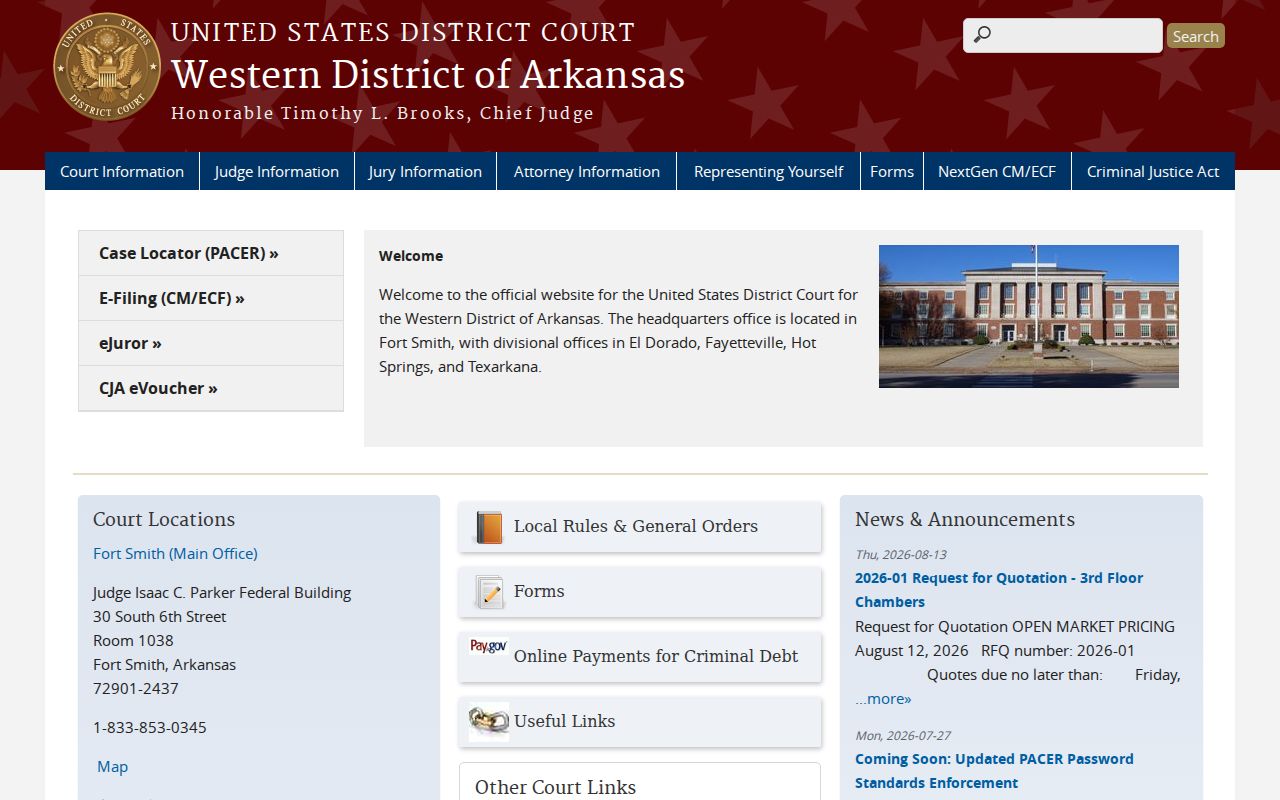
The federal court page above separates federal jurisdiction and its contacts. It does not show or confirm a Calhoun County arrest warrant. The official PACER policy page explains how federal docket access works and where it stops:
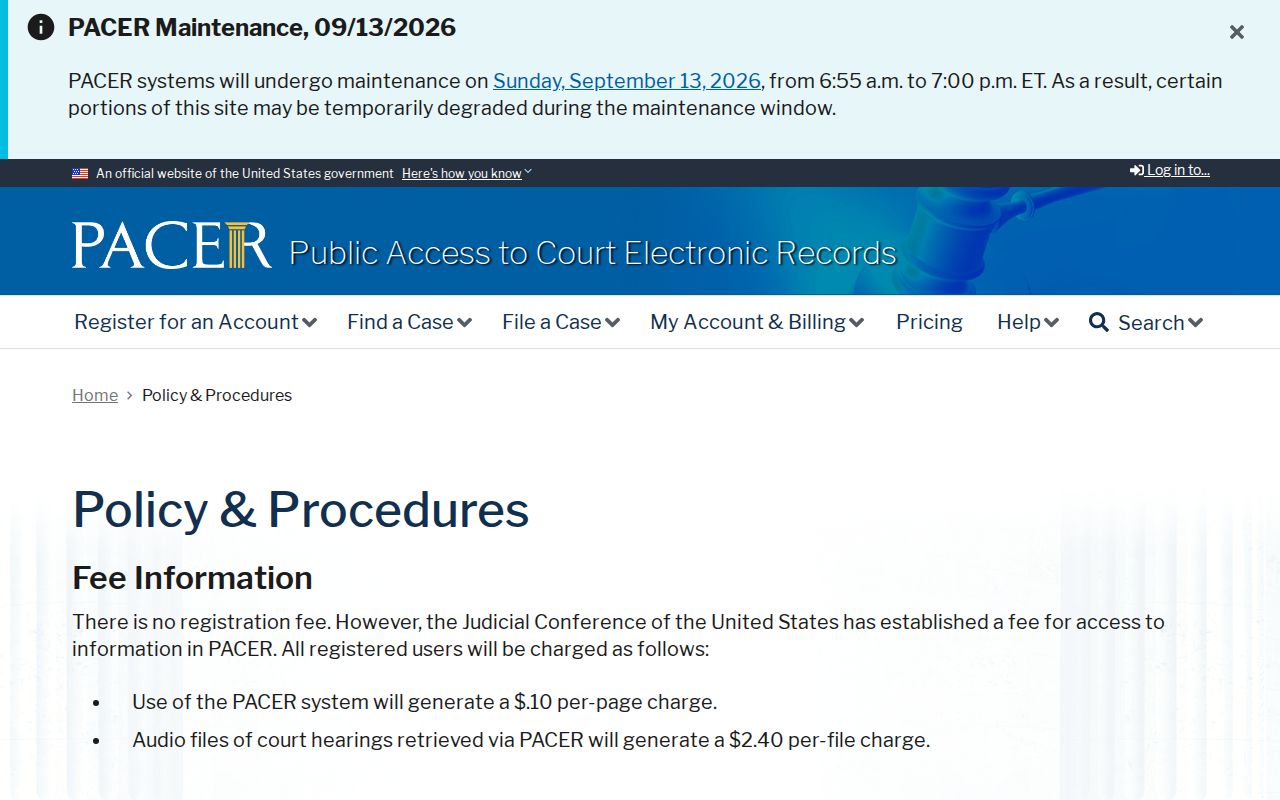
PACER is not a complete arrest-warrant database. Sealed process may never appear there.
Act carefully: Speak with an attorney before surrender, and verify the exact court, location, hours, bond terms, and any other hold.
The Calhoun County warrant records overview walks through other resolution routes. A recall, quash, arrest, or final action has to come from the proper authority.